
In 2026, the word coliving is being slapped onto hundreds of different types of accommodation. It might mean a professionally managed apartment building for young professionals, with a WhatsApp group for meetups; it could mean a shared home for digital nomads in Mexico, with a collective kitchen, dining room and co-working space; or, it could be an intentional community sharing a piece of off-grid land, attempting to restore pre-digital life. The people, properties and reasons for living together can look completely different, so what does coliving actually mean?
At its root, the different versions have one thing in common: Coliving is a deliberate decision to live in community with other people, rather than simply occupying the same building. A coliving property is designed to share some combination of space, resources and daily life with your neighbours, so that building connections is as frictionless as possible.
To understand where that idea came from, and why the word has become so blurry, we need to go back before coliving became a property category.
If you’re wondering who I am and what on earth makes me an expert on coliving: I’m Laurens, co-founder of Co404 Coliving. I’ve spent the last five years building community coliving houses for digital nomads across Latin America, so I’ve had plenty of time to figure out what makes a coliving work.
Where did coliving come from?
The modern word “coliving” is relatively new. What the “co-” really stands for is up for debate but it’s been used to mean “collective living”, “convenient living”, “community living” or “communal living”.
Humans undoubtedly need community and our lives have always been arranged that way. But, as we’ve “evolved”, “modernized” and “civilized”, we’ve tended to lose touch with each other. Ironically, as the size of our communities grew into cities, people tended to become more isolated and lonely. As we became more independent and stopped relying on each other for every day tasks, the window of opportunity to form relationships shrank.
“Coliving” was formed in response to these issues. Two famous examples were the “cohousing” communities that were formed in Denmark: Sættedammen, established in 1972, and Skråplanet, established in 1973. The ambition of the project was to move the isolated nuclear family into collective communities. Private homes were combined with shared common spaces and activities — not to abolish privacy or independence, but to give people more opportunities to rely on and interact with one another.
Is Coliving The Cure To Modern Loneliness?
The useful lesson from the Danish cohousing experiments was how communal spaces and activities were used to create community. By creating repeated reasons to encounter the same people, socialising became simpler. Instead of relying on one carefully organised social event to make everyone become instant friends, daily life was structured to allow connections to form more gradually and organically.
Shared meals are one of the clearest examples. At Sættedammen, common cooking and eating became a central focus of community activity. At Co404, we’ve seen exactly the same thing: a weekly “family” style dinner is all it takes to form friendships. Making friends as an adult can be as awkward and pressure-filled as a first date or a job interview, but the simple act of breaking bread together can dissolve the tension.
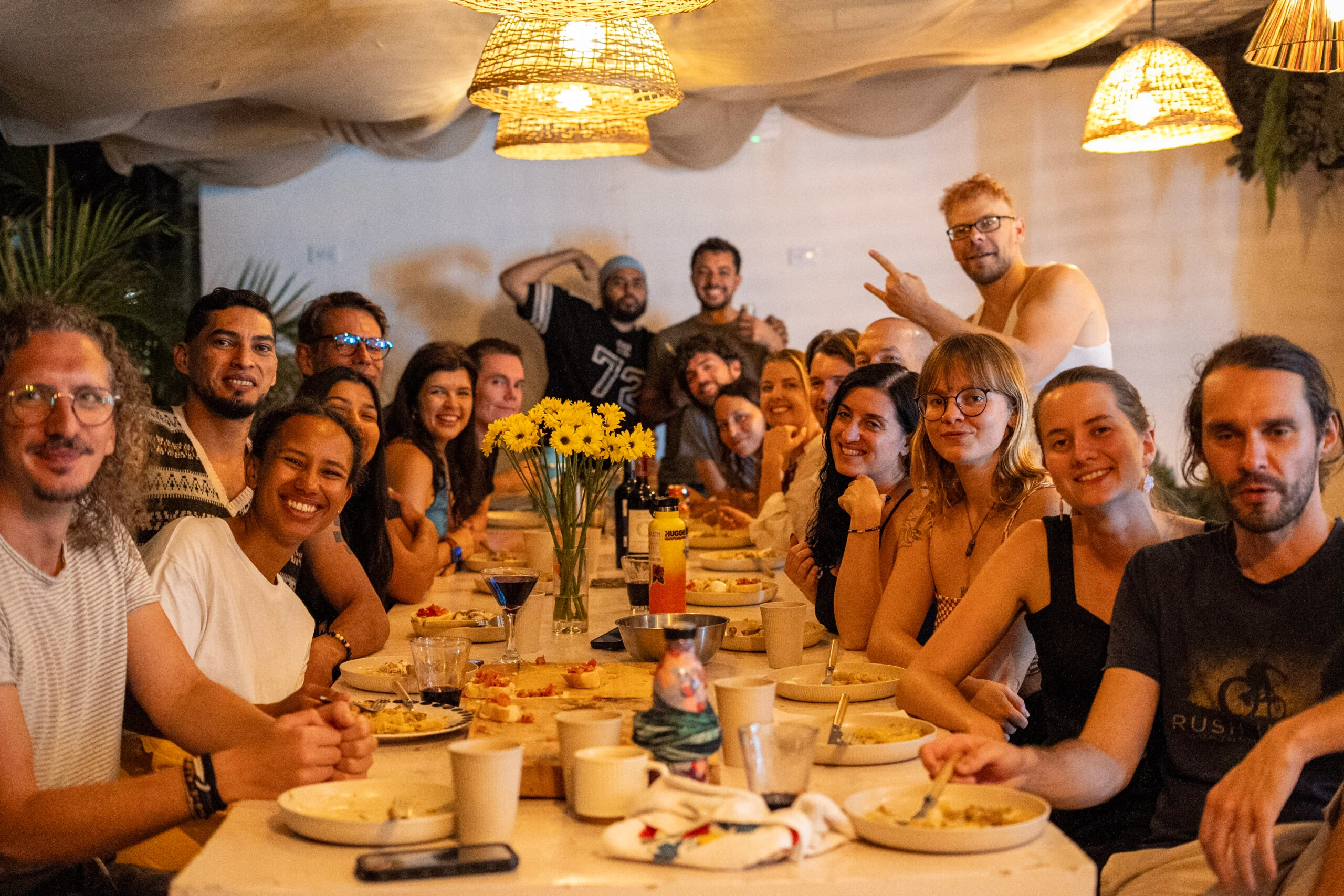
So, in our view, a shared kitchen doesn’t automatically make a property a coliving – the way that kitchen is used is the important part.
Coliving in the Age of Remote Work
While loneliness was already on the rise well before the pandemic, afterwards, the issue became critical. Our lives were now designed so that we wouldn’t have to leave the house or come into contact with a single soul. The World Health Organization began describing social isolation as a widespread global problem.
Social interaction turned into something we have to schedule. While friendships and romances used to form naturally through repeated interactions at work, at your local store, at your local bar, they disintegrated into something you needed to book in, via an app.
And so, more modern forms of coliving and cohousing have begun to arise. From coliving projects in big cities for permanent residents, through to coliving houses in remote locations, designed for long-term travellers and digital nomads.
Coliving For Digital Nomads
For solo travellers and digital nomads, you can add another problem on top of this: constant goodbyes. Now that many of us have the opportunity to work online, we’ve been given unprecedented freedom. On the flipside, digital nomads can live months and years without meaningful community.
Meeting new people every few days is invigorating as a solo traveller when you first hit the road. Then, six months in, you’re juggling full-time work with the exhausting task of seeking out new friends. You pluck up the courage, approach that person across the room and ask to hang out. You grit your teeth through the awkward first-date-type hang outs from an online meetup group. Just for your new friend to leave the city two days later.
So, slow travel accommodations for digital nomads have started popping up. Designed for stays from a month to six months, with private rooms, dedicated working spaces and shared activities that don’t require so much social battery to get started. Ultimately, coliving for digital nomads is designed so you say fewer goodbyes and, ideally, find friends you can meet up with at your next remote work destination.
What Are The Different Types Of Coliving?
The commercially operated form of coliving that most people recognise today emerged in the early 2010s, combining private rooms with furnished communal areas, services and flexible rental arrangements.
There are good practical reasons for that model: moving cities is complicated, furnishing a flat is expensive, finding housemates can be exhausting, and a conventional lease is awkward when you don’t know how long you’ll be staying. So, the modern coliving for digital nomads is designed to meet all of those needs: longer stays, a desk and stable WiFi ready and waiting for you and that much needed social interaction built into your everyday life. No more online meetups and much fewer goodbyes.
Coliving vs Cohousing: What’s The Difference?
Cohousing is generally more resident-led, while commercial coliving is usually operator-led. Modern cohousing grew from communities deliberately designing private homes around shared spaces and activities, often with residents playing an active role in organising and governing the community. Commercial coliving usually starts with a property operator that has already designed the building, rules and resident experience.
There is a spectrum between the two. Ask who creates the community, how much of everyday life is shared and how much control residents have. Often, the choice between the two comes down to your timeline. For a digital nomad, staying in a city for 1 to 6 months, the concept of cohousing can require too much commitment and time investment to get embedded. For a remote worker hoping to move and settle into a city, cohousing can be a great way to create the exact type of community you want to see.
Coliving vs House Share: What’s The Difference?
A house share simply means several people live in the same property. Professionally managed coliving adds an existing social framework, so you don’t have to build the vibe from scratch. For digital nomads, house shares can be a cheaper option for a short term stay. But the gamble is whether you’ll get along with your roommates.
One of the major benefits of coliving is that you’re often sharing with between 10 and 30 people, so you’re more likely to find someone you “click” with. Meanwhile, the added expense goes towards daily cleaning and professional community management, to reduce social friction. That can mean getting the social benefits of living with other people without making four or five housemates negotiate every aspect of cleaning, cooking, noise, guests and working from home.
Is coliving just a fancy hostel?
There is some overlap, especially in digital nomad destinations, but a hostel is primarily accommodation for travellers, while coliving encourages longer term stays and a more balanced lifestyle. Colivings are usually built with dedicated workspaces and attract other like-minded slow travellers who aren’t looking to party every night of the week. For slow travellers and remote workers, digital nomad hostels can absolutely be a viable option. Simply look at how long people stay, whether they can work properly and what kind of social activities are organised (hint: a pub crawl on a Wednesday night tells you a lot about the pace of life!)
What’s the connection between coliving and coworking?
Many modern colivings are designed for remote workers, so inevitably, the two have become intertwined. Some colivings, like Co404, are built around exactly this idea: arriving in a new city can be overwhelming, and finding somewhere you can actually work is harder than it sounds. For us, a good coliving space is one where your work can be prioritized too. That means proper desks, call booths, enough space for everyone and, ideally, a bunch of other people who are committed to doing good work while they’re on the road.
How do you find a real coliving space in 2026?
There is no universal set of criteria that allows an accommodation brand to call itself a “coliving”. But, we’ve seen one too many AirBnbs that have a dining table and steady WiFi call themselves a “coliving”. Or, better yet, a family renting out their spare bedroom and calling it “a coliving perfect for digital nomads!”.
So, here’s what we’d look for to figure out if it’s really a community-style coliving:
- Evidence of genuine community – photos of groups, activity schedules that don’t revolve around pub crawls, reviews from past guests, testimonials from bloggers and content creators.
- The size of the kitchen and the dining area – is it designed for groups to come together or for you to take turns in the kitchen, argue over the dishes and ultimately just dining out.
- The working space – are you sharing a small dining table, where you’ll be interrupted by your neighbour taking calls? Or are there real desks and private call spaces?
We’ve actually curated a list of more than 60 colivings worldwide who we believe fit these criteria. When you sign up to our newsletter, you’ll get a copy.
So, What Does Coliving Actually Mean?
At Co404, our answer is practical. We built our houses for people travelling alone who still want to work properly, explore a city and have other people around them. All of our locations feature an enormous, over-sized dining table and plenty of cooking spaces – because we know eating together is one of the easiest ways to break the ice. At the same time, quiet call booths and cosy private rooms make it all sustainable, because community should never mean giving up the ability to be alone. We’ve always believed that travel could be a long-term lifestyle and so we design our spaces to make it sustainable.
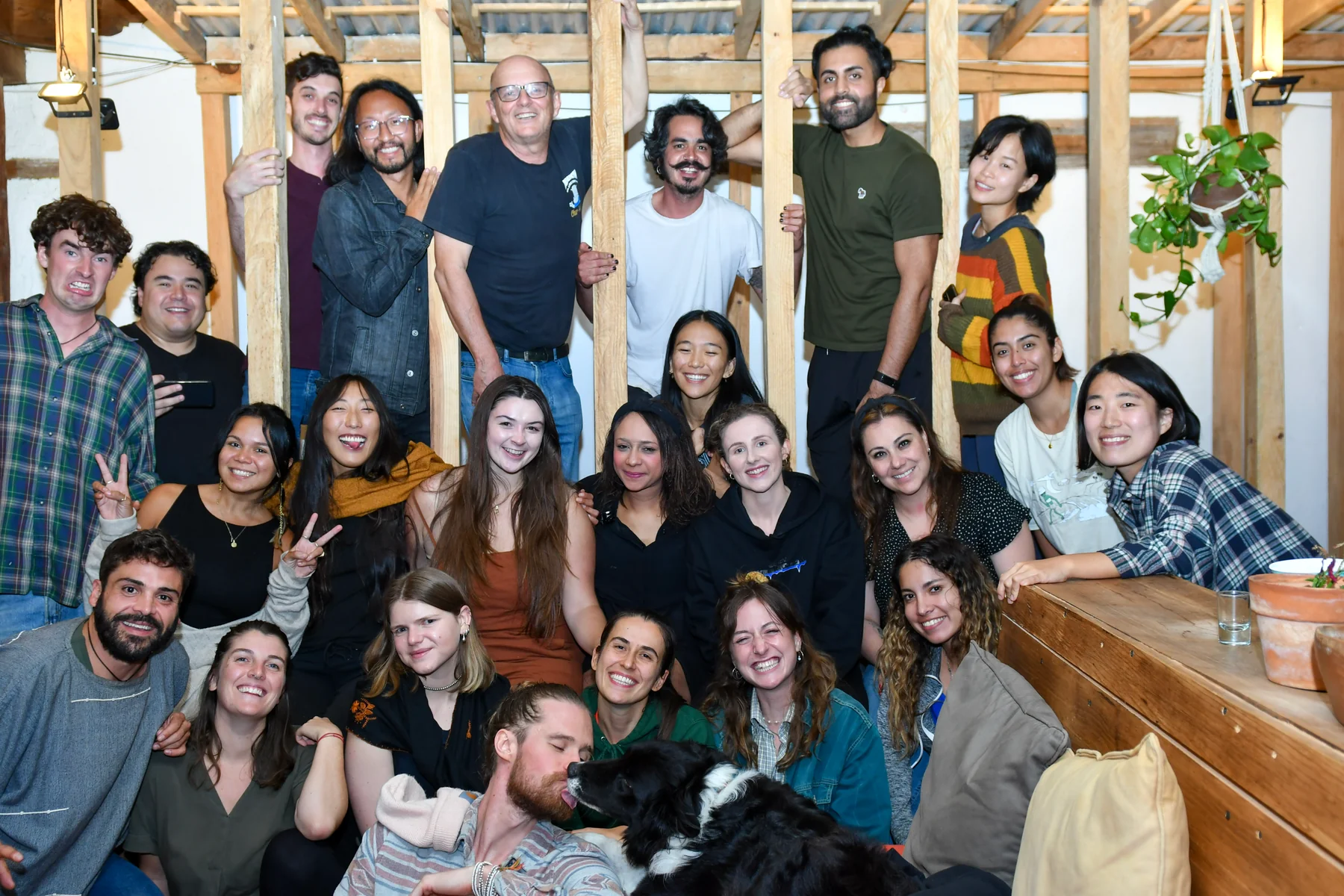
While the people who come through Co404 will inevitably move on, our goal is simpler: to make solo travel feel a little less solo, reduce the number of meals you eat alone and make the huge backpack you are carrying feel just a tiny bit lighter. Maybe that is ultimately what the “co” is worth.
Comments