The first thing Oaxaca does is mess with your concept of a Tuesday. You sit down at 9 a.m. to knock out a deck, and by 9:20 there’s a brass band rounding the corner with a bride in tow and what appears to be a donkey wearing flowers. You close the deck. You watch. You reopen the deck. You finish it anyway, because the WiFi is holding at 180 Mbps and the deadline doesn’t care that this is the most beautiful interruption of your year.
That’s the texture of life as one of the Oaxaca digital nomads who actually stuck around past the first two weeks. The city does not arrange itself around your calendar. You arrange yourself around it, and somehow you end up working better. Here’s what that actually looks like in 2025 — neighborhoods, internet, costs, the rhythm, and the parts of the experience nobody puts in the brochure.
Why Oaxaca keeps pulling remote workers back
Three things, in order of how much they matter once you’re on the ground:
- The infrastructure quietly works. Fiber in Centro, Reforma, and Jalatlaco runs 100–300 Mbps in any place that’s serious about it. The 4G coverage from Telcel is solid across the valley. Power is stable. This is not the part of Mexico where you spend an afternoon fighting your router.
- It’s a real city, not a nomad bubble. Oaxaca was a destination for chefs, weavers, mezcaleros, and architects long before the laptop crowd showed up. You’re a side dish here, not the main course, which keeps the place honest.
- The pace forgives you. Long lunches are normal. So are mid-afternoon walks. Nobody is impressed by you working until 8 p.m. — they’re confused by it. It’s the rare nomad city where slowing down is the local default, not a wellness influencer’s selling point.
The math is friendly too. The Mexican tourist permit gets you up to six months on arrival. Central time zone overlaps the entire US workday and gives you a humane morning if you’re working with Europe. Costs are a real fraction of what you’re paying in Mexico City or Medellín, and the food alone is reason enough to extend.
Neighborhoods: where to actually base yourself
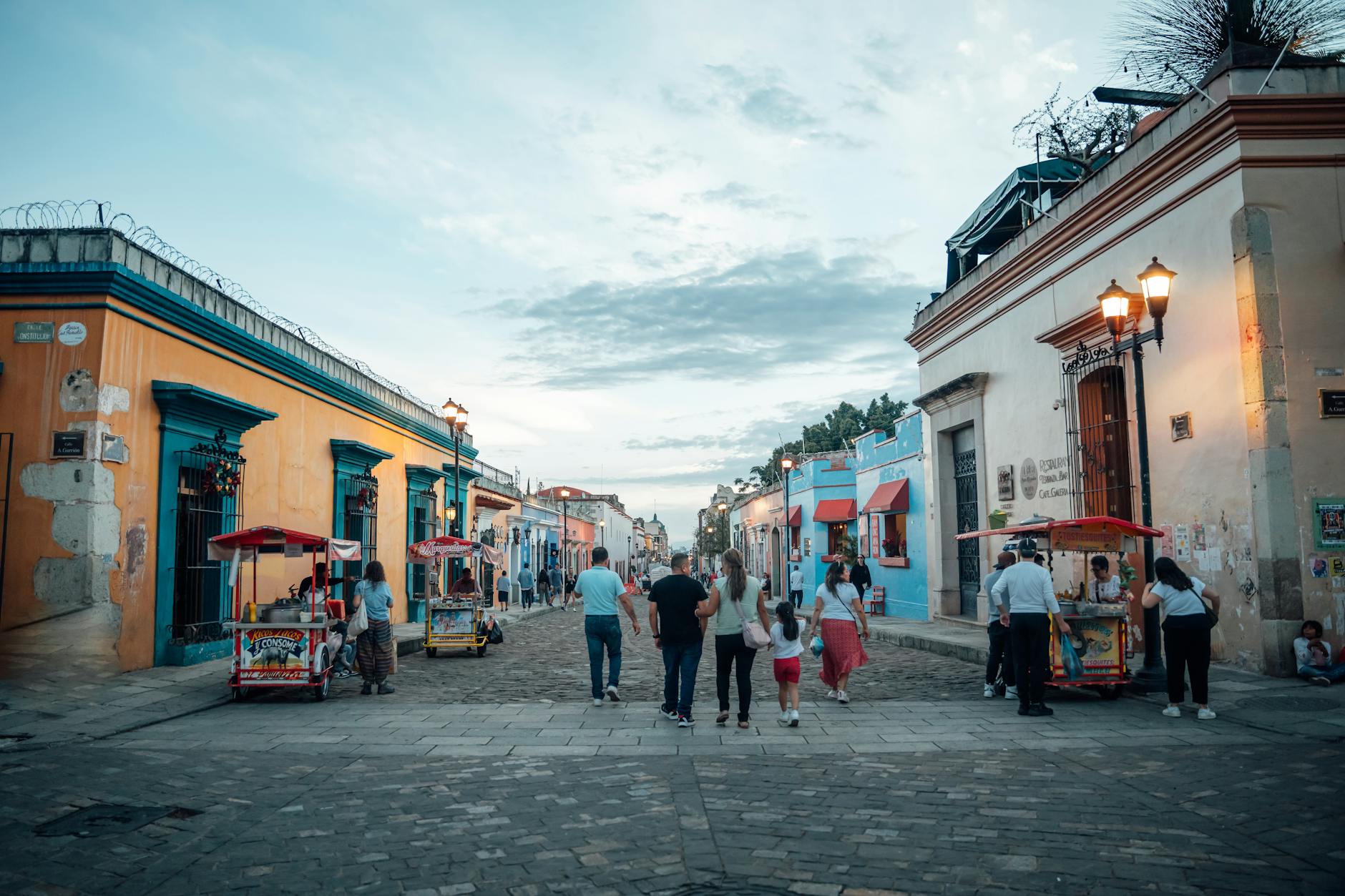
Oaxaca City is walkable end-to-end in about 40 minutes, so “neighborhood” here is about character, not commute. Four pockets matter for nomads.
Centro. The postcard. You’ll wake up to church bells, you’ll never be more than three blocks from a mezcalería, and you’ll get a parade every other day whether you ordered one or not. Glorious for two weeks. Past month one, the noise starts to win.
Reforma. The grown-up move. Tree-lined, more residential, plenty of food options, the densest concentration of good cafés for an afternoon work block. This is where most long-term remote workers quietly land.
Jalatlaco. The pretty one. Cobblestones, murals, a chapel in the middle, and the slowest mornings in the city. Walkable to Centro in 15 minutes. Watch the prices — it’s been discovered.
Xochimilco. Quieter, residential, a real walk to anywhere lively. Doable, not optimal for a first stay.
The sweet spot most people land on is the seam between Reforma and Centro, which is roughly where CO404 Oaxaca sits. Close enough to walk to a mezcal tasting after dinner. Far enough that the brass band at 7 a.m. isn’t inside your room.
The actual workday in Oaxaca
You won’t believe how fast the routine forms until it does. By day five most people are running some version of this:
Morning (8–12). Deep work block. The fiber is at its calmest, the cafés are empty if you want one, and the altitude makes your brain weirdly sharp before noon. Most of your real output lives in these four hours.
Lunch (around 1:30). Comida corrida at a family-run spot — three courses, agua fresca, sometimes a dessert if they like you. You’ll know the owner’s name by week two. This is non-negotiable. Skipping it is how nomads end up burnt out in a city that’s actively trying to feed them.
Afternoon (3–6). Lower-intensity work. Emails, edits, the Zoom you’ve been dreading. Maybe a change of scenery to a café in Reforma. Maybe the rooftop if the light is doing its thing.
Evening. Slam that laptop shut. The city opens up at golden hour — Llano park fills with families, the Andador Macedonio Alcalá turns into a slow river of people, and somebody you live with is already deciding where dinner is happening. You go.
Sundays are Tlacolula market if you’re ambitious or Hierve el Agua if you’ve been promising yourself for three weeks. Either way, you’ll come back and nap.
WiFi, power strips, and the unglamorous logistics
A short, useful list of things nobody warns you about until your second week:
- Café WiFi degrades after lunch. A spot pulling 300 Mbps at 9 a.m. can crawl by 2 p.m. when thirty laptops have shown up. Always run a speed test from your seat before committing to a four-hour session.
- Rainy season is real. Roughly June through September. “Rainy” here means a heavy afternoon downpour most days, then clear evenings. Smaller cafés sometimes lose internet during storms. Have a backup spot, or a home base that doesn’t rely on the same line.
- Outlets are scarce in pretty places. The prettier the courtyard, the worse the chance you’ll find one. Pack a small power strip if you’re picky about staying charged.
- Altitude bites. Oaxaca sits around 1,550 meters. The first three days you’ll feel slightly winded climbing one flight of stairs and your third espresso will hit like a fifth. By day four, you’ll forget about it.
- SIMs are easy. Grab a Telcel SIM at the airport or any Oxxo for almost nothing. You’ll lean on it more than you expect.
The festival calendar will hijack your work week
This is the part Oaxaca regulars learn to plan around, not against. The city has a cadence of saint’s days, calendas, weddings, and religious processions that’s basically constant, plus two events that genuinely take over the place.
Guelaguetza runs through most of July — a celebration of the eight regions of Oaxaca, with music, dance, food, and parades that don’t ask for your schedule’s permission. The energy is unreal. Book your accommodation early or arrive expecting prices to climb.
Day of the Dead peaks at the end of October into the first days of November. Cemeteries become living rooms. The light, the marigolds, the muertadas in Etla — it’s the trip a lot of people are accidentally planning their whole year around without realizing it.
The rest of the year has its own rhythm of smaller things: Noche de Rábanos in December, Semana Santa in spring, Easter calendas that wind through neighborhoods at 10 p.m. on a Wednesday for reasons nobody quite explains. The nomads who fall in love with Oaxaca are the ones who let these events crash their calendar. The ones who don’t tend to leave a little frustrated and never quite understand what they missed.
What it actually costs and how long to stay
Oaxaca is one of the better-value remote work bases in Mexico right now. The basics are cheap (lunches, transport, produce at the markets), and the splurges are still reasonable (a high-end tasting menu in this town runs less than a mediocre dinner in most US cities). Where costs sneak up on you is housing — short-term rentals in Centro and Jalatlaco have climbed steadily, and the cheapest Airbnbs are almost always cheapest for a reason your back will discover by week two.
A coliving setup bundles the room, the workspace, the fiber, the cleaning, and the social layer into one number you can plan around, which is genuinely the point. You stop spending Sunday evening rebooking your life.
On length: two weeks is a great taste. A month is when the city starts handing you a life. Two months and you’re a regular at a comida corrida spot, you’ve got a favorite mezcal you can’t get anywhere else, and you’re quietly considering whether you really need to be back in your home country in March. Most people who book a week extend at least once. We’ve stopped being surprised by it.
If you want a contrast trip, pair Oaxaca with somewhere with a different climate — our San Cristóbal house is the highland, sweater-weather counterpart, and a lot of people split a couple of months between the two without leaving Mexico.
Ready to plug in?
If you’ve read this far, you’re probably already half-packed. Come grab a room, plug into the fiber, and let the brass band find you on a Wednesday morning. We’ll save you a seat at the rooftop dinner. Book your stay at CO404 Oaxaca — bring a light jacket for the evenings, an appetite for tlayudas, and the deadline you’ve been quietly avoiding. The city will help.