
A guy in my old WhatsApp group spent six weeks bouncing between Roma Norte and El Poblado last year, posting daily voice notes that read like a tennis match. Monday: “CDMX is the only city that matters, the food is unhinged.” Thursday: “Medellín wins, I’m never going back, the weather is a personality.” Sunday: “Actually I think I have to live in both forever.” He’s not wrong, exactly — but most people don’t have the runway (or the patience) to date two cities simultaneously. So if you’re trying to choose between them for a real stretch of remote work, here’s the version of the comparison nobody quite writes, told from inside our Medellín house and a lot of CDMX weekends.
The short answer up top: pick Medellín if you want a base, pick Mexico City if you want a project. They’re both legit for the medellin vs mexico city digital nomads question — they just answer it in completely different keys.
The climate question is bigger than it sounds
Medellín is the city that broke my belief in seasons. It hovers around 22°C year-round, the rain shows up in the late afternoon and then politely lets you have dinner outside, and you will own exactly one light jacket the entire time you’re there. The valley sits at about 1,500 meters, which is high enough that you sleep well and low enough that you don’t notice the altitude after day one.
Mexico City is 2,240 meters, and that number runs your whole body for the first week. The light is harsher, the dry season is genuinely dry, and the rainy season (roughly June to October) brings biblical downpours that flood Reforma in twenty minutes flat. It’s not bad weather. It’s just weather that you have to plan around — which Medellín, almost uniquely among big nomad cities, lets you ignore.
For deep-work afternoons, the Medellín climate is a quiet game-changer. You stop checking forecasts. You stop carrying layers. You start treating outdoor space as default.
Size and density: a city you can hold vs a city that holds you
Mexico City has 22 million people in the metro area. It is, by any honest measure, one of the great cities of the world — and that’s not nothing for a remote worker. The museum density is unreal. The food scene runs from street tacos to tasting menus that would embarrass Paris. There’s a queer scene, a tech scene, a literary scene, a salsa scene, and probably four scenes you’ll never find out about. If your work feeds on cultural input, CDMX is a buffet.
It’s also exhausting. Crossing town can take 90 minutes. The air quality has bad weeks. The altitude makes your second beer feel like your fourth. By the end of a CDMX month, most nomads need a recovery week somewhere quieter.
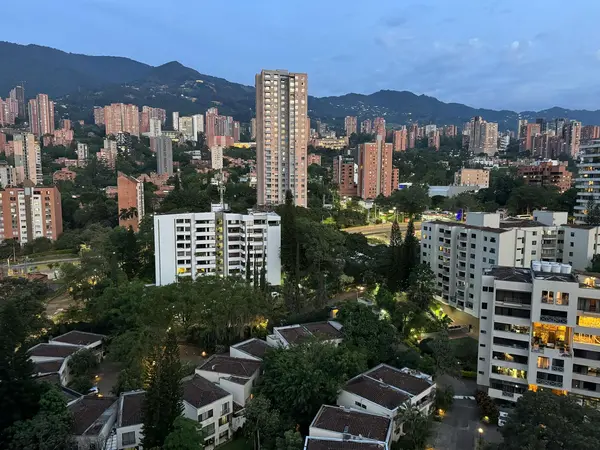
Medellín is roughly 2.5 million in the valley, and the whole nomad world fits between three or four barrios connected by a metro locals are weirdly (rightly) proud of. You can land at the airport, drop your bags in Laureles, and have your coffee spot, your gym, and three new friends by Thursday. The city is small enough to learn and big enough to keep surprising you. That ratio is what makes CO404 Medellín work as a base — you can disappear into the neighborhood for a productive week and still be 15 minutes from anything that’s happening.
Wifi, workspace, and the actual work part
Both cities have fiber that will handle your video calls without flinching. This isn’t 2017 anymore. The differences live in the details.
- Medellín: Fiber is widespread and stupidly cheap. 300+ Mbps in most decent buildings. The café scene is solid in Laureles and Provenza, though some Poblado spots have started turning off wifi at peak hours to push laptop campers out.
- Mexico City: Fiber is excellent in Roma, Condesa, Juárez, and Coyoacán. It’s also unevenly distributed — a Roma Norte apartment can be 500 Mbps next door to a building that’s still on copper. Test before you commit.
The bigger difference is the time zone. Medellín is on Colombia time, which overlaps the entire US workday and gives you a friendly morning if you’ve got European clients. Mexico City flips between Central time and the rest of the country depending on daylight savings politics. Workable either way — Medellín is just slightly more boring, which when it comes to time zones is a compliment.
Cost: same continent, different math
People say these cities are similar in price. They’re not, quite. Mexico City has crept up hard in the last five years — Roma Norte one-bedrooms now flirt with what you’d pay in Lisbon, and the gringo tax on cafés and restaurants is real. You can still do CDMX on a budget, but you have to choose to, and the choice gets harder the longer you stay.
Medellín is still genuinely cheaper for the same lifestyle. A long lunch with a friend, a yoga class, an Uber across town, a salsa night — the running total at the end of a Medellín week tends to feel almost suspicious. Coliving math works out around $1,600–$2,000 all-in for most people we host, including the room, the workspace, the social layer, and the conversations you didn’t have to schedule.
Vibe, nightlife, and the kind of week you’ll actually have
Mexico City is a city that performs. You’ll go to a Tuesday opening at a gallery in San Rafael, then a mezcalería in Juárez, then end up at a sobremesa in Condesa that’s still arguing about Bolaño at 2 a.m. The energy is curatorial — there’s always something specific to attend, and the city assumes you have taste.
Medellín is a city that invites. Reggaeton from the corner store on a Tuesday morning. Salsa at Son Havana on a Wednesday because that’s just what Wednesday is. Ciclovía on Sunday with half the valley out on bikes. The energy is participatory — you don’t observe Medellín, you fall into it. Paragliding in San Félix or a weekend in Guatapé happen because somebody in the kitchen at the house mentions it on Thursday.
Neither vibe is better. They attract different people. The CDMX nomads I know are usually a little older, a little more rooted in a creative discipline, and treating the city as a temporary studio. The Medellín nomads tend to be in motion — building something, restarting something, dating the lifestyle to see if it sticks.

How to actually decide (without losing a month to indecision)
If your work needs cultural fuel and you can handle being slightly tired all the time, CDMX. If you want a city that holds your nervous system steady so you can ship things, Medellín. If you’re a first-time nomad, Medellín is the softer landing — smaller, friendlier on the wallet, and easier to plug into without a Spanish course under your belt.
The move a lot of our community lands on is the pairing: a stretch in one, a stretch in the other. A month of Medellín to find your rhythm, a month of CDMX to feed the brain, back to Medellín to recover. Mexico’s tourist permit and Colombia’s 90-day stamp make this absurdly easy on paper. The hard part is not booking three months from your couch back home before you know which one is actually yours.
If Medellín is sounding like the answer — or the better starting point — come grab a room at the house. Fiber tested, desk waiting, a kitchen full of people who can tell you which arepa lady to trust and which bar to skip. Book a week and we’ll see you on the rooftop. Bring a light jacket for the evenings, that’s the only weather rule.
Comments